When shopping for fine jewelry, one of the most common questions couples ask is: what's the difference between moissanite and diamond? The answer might surprise you. While both stones are beautiful and durable, they have distinct characteristics that make each unique. In this guide, we'll break down everything you need to know to make an informed choice.
What Is Moissanite?
Moissanite is a naturally occurring mineral — silicon carbide — that was first discovered in 1893 by French scientist Henri Moissan in a meteorite crater. Natural moissanite is incredibly rare, so today's moissanite jewelry uses lab-created stones that are ethically produced and environmentally responsible.
The result is a gemstone that rivals diamond in beauty but costs a fraction of the price. Moissanite is now one of the fastest-growing choices for engagement rings, wedding bands, and fine jewelry.
Brilliance and Fire
This is where moissanite truly shines — literally. Brilliance refers to the white light that reflects from the stone, while fire refers to the rainbow-colored flashes of light.
- Brilliance: Moissanite has a higher refractive index (2.65) than diamond (2.42), meaning it reflects more light and appears sparklier.
- Fire: Moissanite disperses light into spectral colors more than diamond, producing 2.4 times more fire. This gives moissanite its signature rainbow flashes.
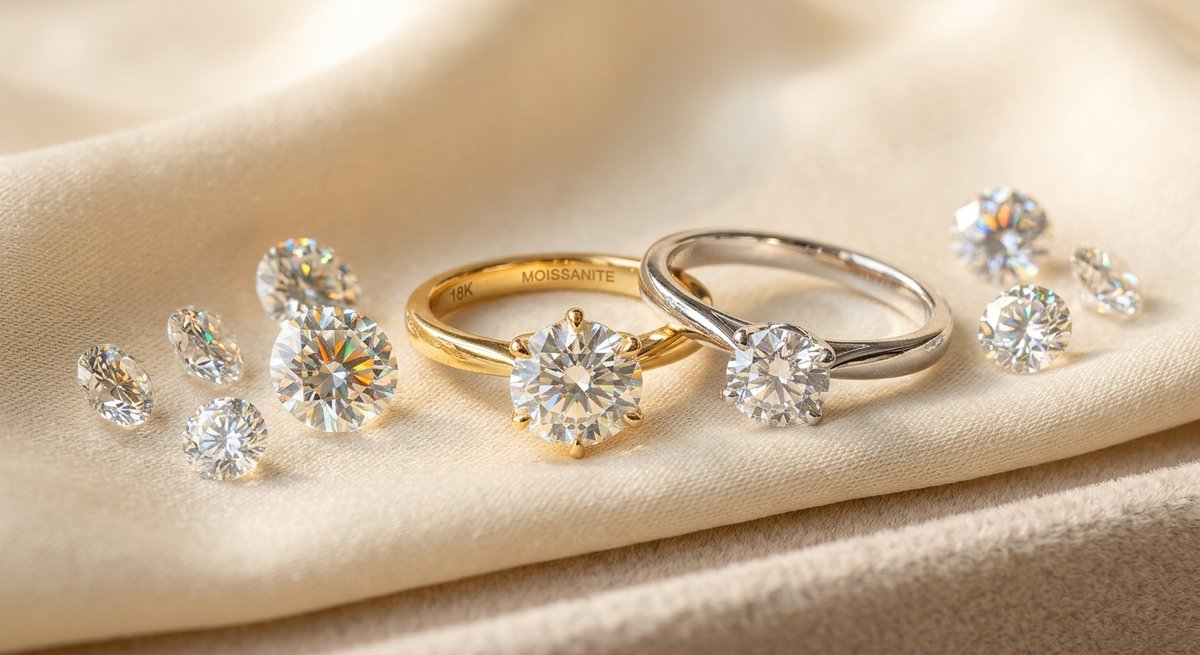
To the naked eye, moissanite often appears more brilliant and colorful than diamond. Some people prefer this extra sparkle, while others prefer the subtler white light of diamond. It's a matter of personal preference.
Durability
Durability matters for jewelry you wear daily, especially engagement rings and wedding bands. The Mohs scale measures scratch resistance:
- Diamond: 10 on the Mohs scale (the hardest known natural material)
- Moissanite: 9.25 on the Mohs scale (one of the hardest materials available)
While diamond is technically harder, moissanite's 9.25 rating means it's extremely resistant to scratching and suitable for everyday wear. In practical terms, both stones are durable enough for daily use and will maintain their polish for decades.
Appearance
Moissanite and diamond look similar but have subtle differences:
- Color: High-quality moissanite (DEF color grade) is completely colorless, just like the finest diamonds. Lower grades may have a faint warmth.
- Sparkle pattern: Moissanite's higher refractive index creates a different sparkle pattern — more rainbow fire compared to diamond's white brilliance.
- Clarity: Lab-created moissanite is typically VS clarity or better, with very few inclusions visible to the naked eye.
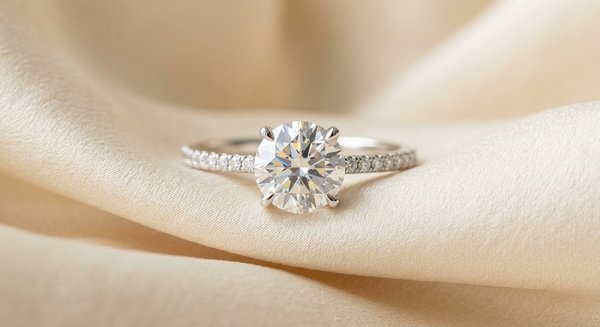
To most people, moissanite and diamond are indistinguishable. Even jewelers often need specialized equipment to tell them apart.
Value
This is where moissanite has a significant advantage. A moissanite stone typically costs 70-90% less than a diamond of equivalent size and appearance. This means you can choose a larger, higher-quality stone for the same budget — or save the difference for other priorities.
For example, a 1-carat diamond engagement ring might cost $4,000-$8,000, while a comparable moissanite ring costs $300-$600. The savings are substantial without sacrificing beauty or durability.
Why Couples Choose Moissanite
Modern couples are increasingly choosing moissanite for several reasons:
- Exceptional value: Get a larger, more brilliant stone for a fraction of the cost
- Ethical sourcing: Lab-created moissanite is conflict-free and environmentally responsible
- Durability: At 9.25 on the Mohs scale, it's built for daily wear
- Brilliance: More fire and sparkle than diamond
- Availability: No supply constraints or price inflation from mining cartels
How to Choose the Right Stone
When choosing between moissanite and diamond, consider these factors:
- Budget: If value is important, moissanite offers far more for your money
- Sparkle preference: If you love rainbow fire, moissanite is the clear winner
- Symbolism: Some prefer diamond for tradition; others prefer moissanite for its modern, ethical appeal
- Color grade: Look for DEF color moissanite for the most diamond-like appearance
- Cut quality: A well-cut stone maximizes brilliance regardless of material
The Bottom Line
Both moissanite and diamond are beautiful, durable choices for fine jewelry. Moissanite offers superior brilliance, ethical production, and exceptional value. Diamond carries traditional prestige and the highest hardness rating. The right choice depends on your priorities, budget, and personal aesthetic.
At Moissaniteglam, we specialize in DEF color moissanite — the highest color grade available — set in 14K gold, sterling silver, and white gold-plated bands. Every piece is hypoallergenic, scratch-resistant, and designed to last a lifetime.